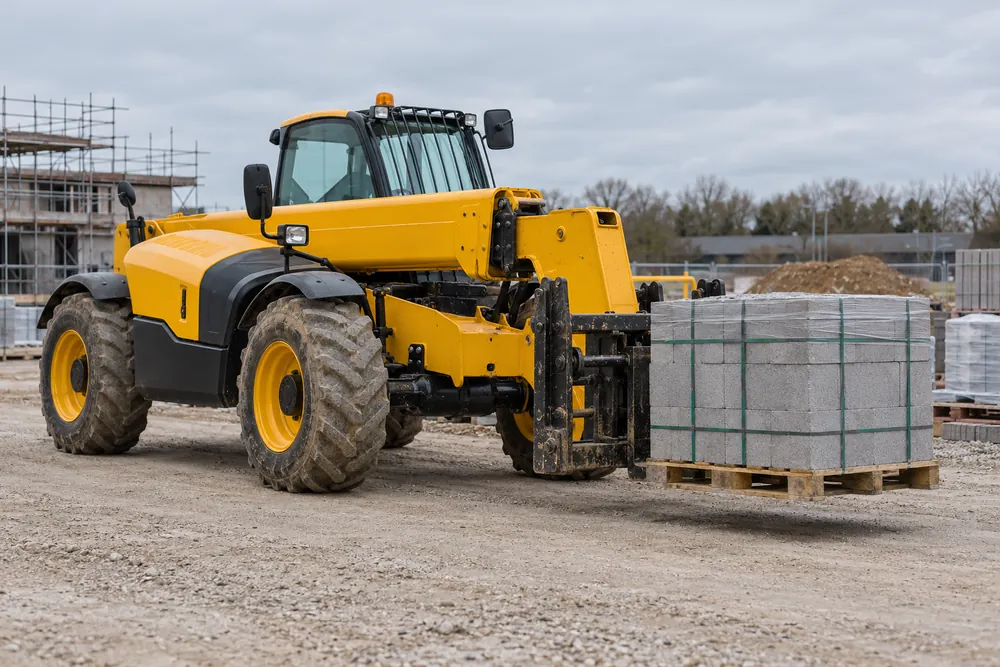
Telehandler hire in Aberdeen is for planned materials handling on commercial and construction sites. The choice depends on what you need to lift, where it must be placed and how the machine will move around the site.
A telehandler is not a substitute for a MEWP when the task is lifting people. Describe the load weight, placement height and forward reach so the proposed machine and attachment can be checked against the correct load chart.
Specify The Actual Load
Start with reliable load information, including packaging, pallet weight and the attachment. Give the load dimensions and centre of gravity where known. Long or irregular items can require a different handling arrangement from a standard pallet, even at the same weight.
The headline lifting capacity is not available throughout the entire working range. Capacity changes with boom extension, angle and configuration. Check the load chart for the intended placement point, and do not select solely on the nominal maximum capacity printed in a sales description.
Match Attachments To The Machine
Forks, buckets and approved lifting attachments perform different tasks. An attachment needs to be compatible with the specific machine and used within the correct operating limits. Confirm the attachment’s weight, connection, condition and documentation as part of the hire enquiry.
Suspended loads require particular planning because the load can swing and affect stability. Do not assume a fork-mounted hook permits any lifting operation. The lift planner must establish whether the configuration and activity are permitted by the manufacturer and suitable for the site.
Plan Travel And Pedestrian Separation
Delivery routes, reversing areas and pedestrian crossings need attention before the machine arrives. A raised or bulky load can obstruct the driver’s view, while corners, slopes and soft edges can introduce stability risks. Agree the route and any signalling arrangements with the site manager.
HSE’s construction guidance identifies vehicle movement and overturning during lifting as key telehandler hazards. Use clear pedestrian segregation and suitable visibility controls. A rough-terrain label does not make unstable ground, unprotected excavations or steep routes acceptable.
UK Lifting And Equipment Duties
The Lifting Operations and Lifting Equipment Regulations 1998 require lifting operations to be properly planned by a competent person, appropriately supervised and carried out safely. PUWER also applies to the suitability and use of the machine and its attachments.
On construction projects, the Construction (Design and Management) Regulations 2015 include site traffic and vehicle duties. Hire paperwork should sit alongside the site’s lifting plan, traffic arrangements and operator authorisation. A delivery handover is not a replacement for an assessment of the planned operation.
Operators, Records And Daily Checks
Telehandler drivers need training and competence for the machine and task, plus authorisation from the business controlling the work. State whether you need an operated hire option considered or will provide a suitable driver. Familiarisation must cover the actual controls and configuration.
Check the required examination documentation and the condition of the delivered machine. Pre-use inspections, defect reporting and maintenance remain separate duties from thorough examination. Keep attachments and keys controlled so that an unapproved change cannot alter the planned lifting arrangement.
Your Hire Process
- Describe the load, its dimensions and weight, the placement height and the maximum forward reach.
- Review the proposed telehandler, attachment and load chart against the lift and the travel route.
- Confirm ground preparation, pedestrian segregation, driver provision, delivery dates and hire terms.
- Complete handover and pre-use checks, brief the site team and carry out the lifting operation to the agreed plan.
Telehandler Hire Pricing Factors
Telehandler hire costs depend on the required reach, load capability, attachment, duration and location. Driver provision, fuel arrangements, transport and site delivery restrictions can affect the overall quote. Ask for each item to be identified so you can compare proposals on the same basis.
Supply the load and radius before requesting alternatives. A smaller machine may be unsuitable at the required reach, while an unnecessarily large machine can create avoidable access and transport complications. Confirm any change of attachment before accepting revised terms.
Read the relevant guidance: HSE work at height, PUWER and LOLER. HSE telehandler guidance covers site transport and operating risks.
Telehandler Hire Questions
Can A Telehandler Lift People?
A telehandler should not be treated as a normal access platform for lifting people. HSE says equipment not specifically designed for lifting people should only be used for that purpose in exceptional circumstances. For planned commercial work at height, enquire about a purpose-designed MEWP and have the access method assessed for the task.
How Do We Choose Telehandler Capacity?
Telehandler capacity must be checked at the actual lift height and forward reach, using the correct load chart for the machine and attachment. Include the load’s weight and centre of gravity, plus any relevant configuration. The maximum advertised capacity alone does not establish that the machine can complete your planned lift.
Is A Rough-Terrain Telehandler Suitable For Any Ground?
A rough-terrain telehandler still has strict limits on slopes, ground condition and operating configuration. The site must provide a suitable route and lifting position, with weak areas and excavation edges assessed. Tell us about the surface before hire so the machine selection and the ground preparation can be considered together.